My work
(Under
construction)
|
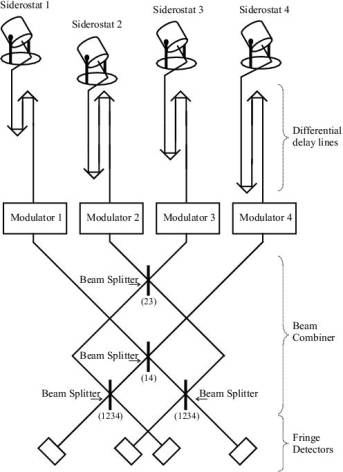
The Michelson beam combiner is a
device that interferes two or more collimated beams of light from a common
source by use of beam splitters. The
output consist of two or more combined beams, whose intensity depend on the
path difference from the source along each beam, as well as on any difference
in perspective associated with angular structure on that source. When the differential delay is equalised
along all interfered beams, we minimise any reduction in fringe contrast due
to the temporal coherence of the viewed source. At the centre of the fringe envelope we can then scan a fringe
through small changes in the differential delays. The scanning is performed by the fringe modulators. The modulators modulate small delay
changes into the input beams, incorporating different rates for each beam, so
to encode all fringe component at |
|
I work mostly on fringe
modulation and visibility extraction.
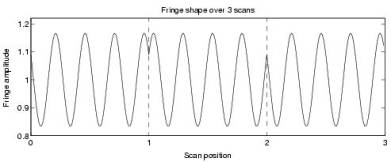
Following figure shows how an
ideal four-way fringe modulation should look like.
The modulation function is
linear across the sweep and covers an integer number of fringes.
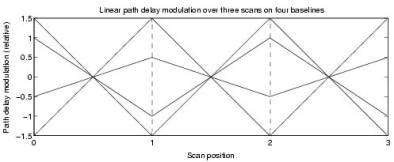
This ideal case extremely
hard to achieve for a multi-way beam-combiner
and at the high frequency of
1kHz/sweep required to freeze out the atmospheric wave-front.
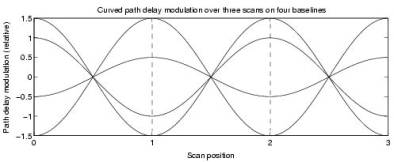
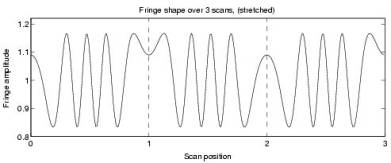
The result is the
significantly less than linear modulation function and distorted fringe shape
that follows:
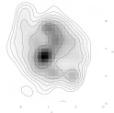
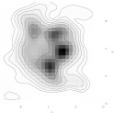
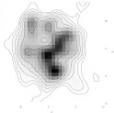
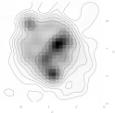
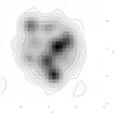
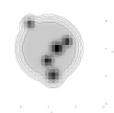
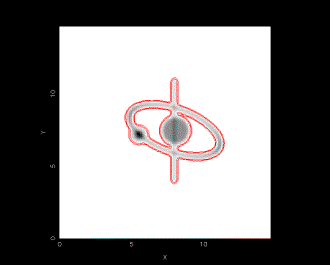
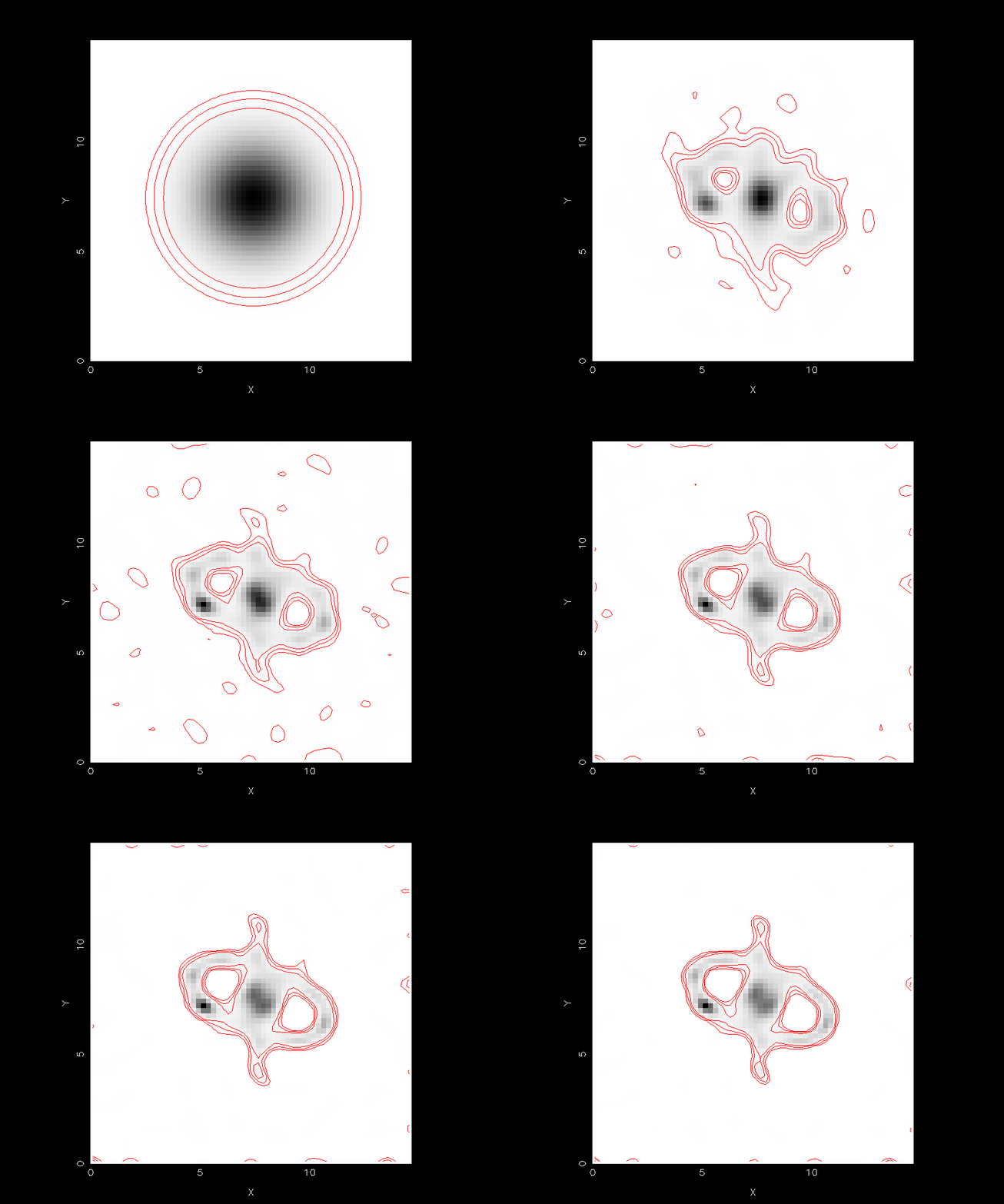
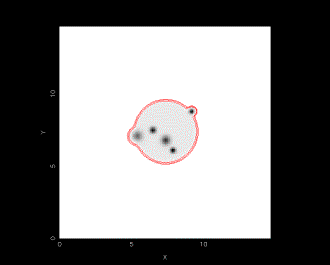
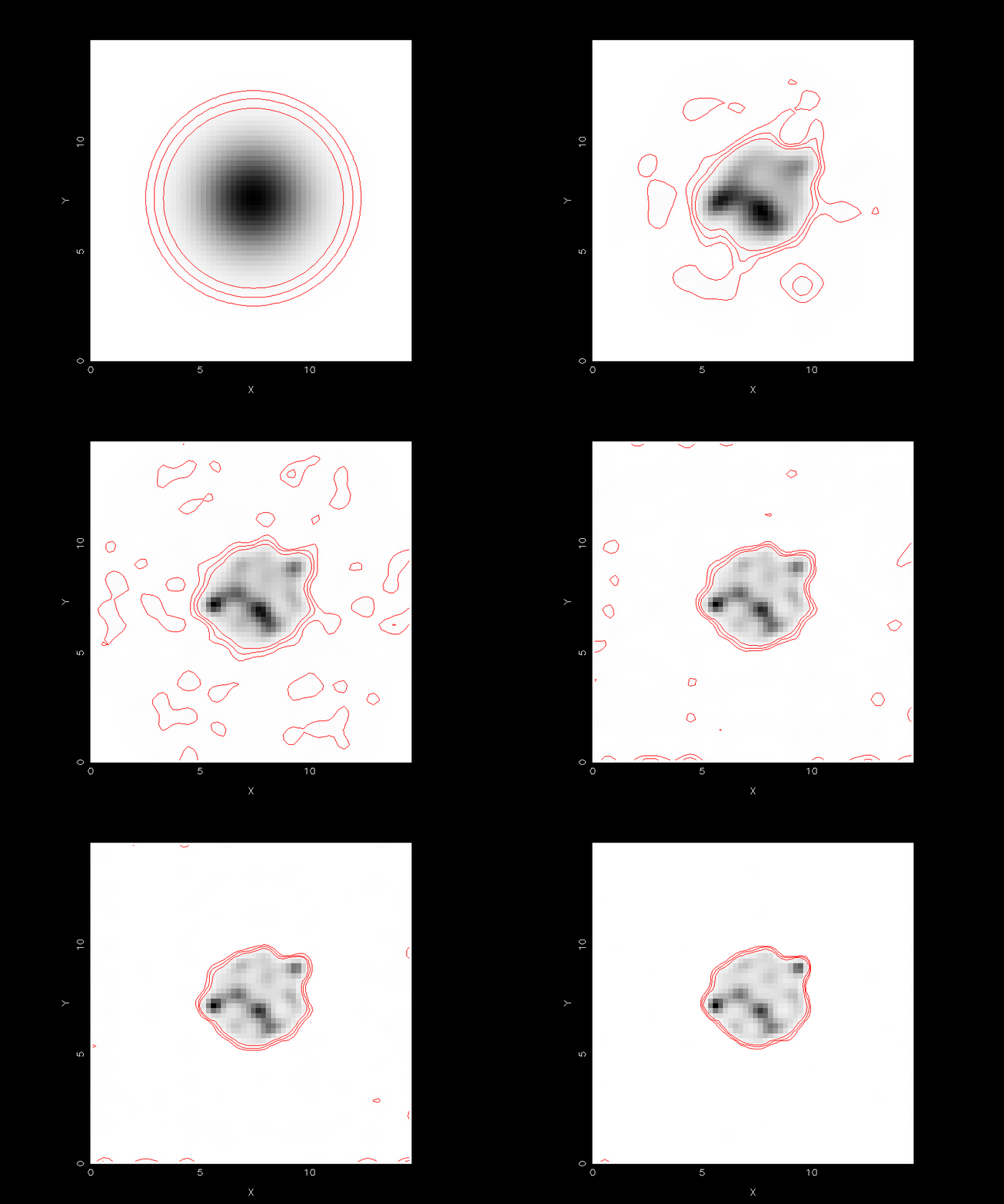
I also work on image reconstruction and simulations
investigating the importance of bispectrum coverage in
model-free optical aperture synthesis imaging.
|
0.4
|
0.25
|
0.16
|
0.10
|
0.05
|
Model
|